Mechanical Engineering books and much more.......

Mechanical books ,notes and lectures(coming soon).

Design software and tutorials and also lectures

software setups, tutorials and much more.

Gearing you up

All about Mechanical Engineering.

DESIGNING Software, Analysis

Auto CAD, ProE, Matlab,Solidworks,and many more (coming soon....).

Wednesday, 20 March 2013

Gear train


A gear train is formed by mounting gear on a frame so that the teeth of the gears engage. Gear teeth are designed to ensure the pitch circles of engaging gears roll on each other without slipping, this provides a smooth transmission of rotation from one gear to the next
gear,


Compound gear trains have two or more pairs of gears in mesh, so that they rotate together.
 
This compound gear train has gears on three shafts.
The gear on the input shaft meshes with a larger gear on a counter-shaft or cluster gear. The counter-shaft has a smaller gear formed on it, in mesh with the output shaft gear.
The motion of the input is transferred through the large gear, along the counter-shaft to the smaller gear, to the output.
The output turns in the same direction as the input, but at a reduced ratio, depending on the relative sizes of the gears.
Since two pairs of gears are involved, their ratios are “compounded”, or multiplied together.

Tuesday, 12 March 2013

Stirling engine


Every Stirling engine has a sealed cylinder with one part hot and the other cold.
The working gas inside the engine (which is often air, helium, or hydrogen) is moved
by a mechanism from the hot side to the cold side.
When the gas is on the hot side it expands and pushes up on a piston. 
When it moves back to the cold side it contracts. Properly designed Stirling engines have two power pulses per revolution, which can make them very smooth running.

Two of the more common types are two piston Stirling engines and displacer-type Stirling engines. The two piston type Stirling engine has two power pistons. The displacer type Stirling engine has one power piston and a displacer piston.

Monday, 4 March 2013

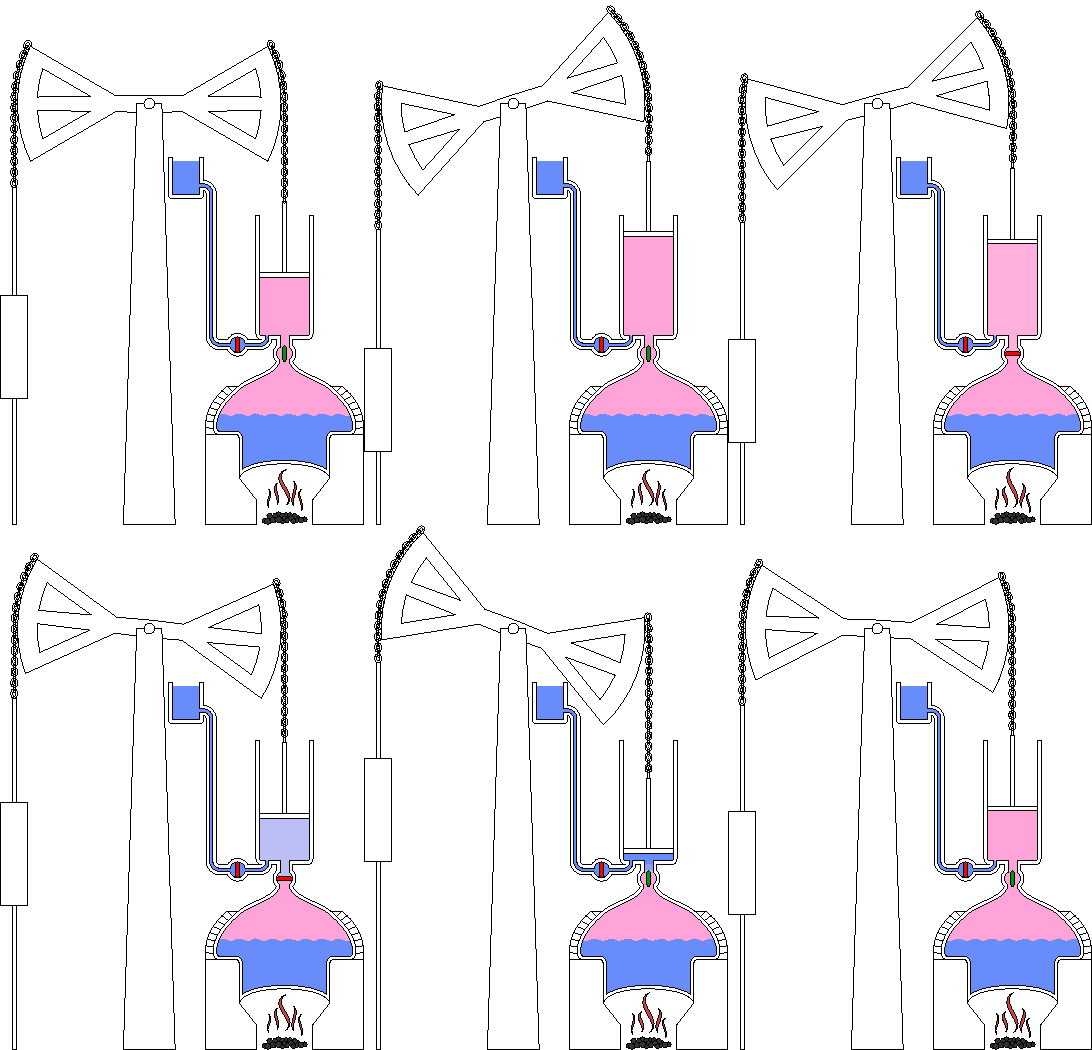
Newcomen Atmospheric Engine

The atmospheric engine invented by Thomas Newcomen in 1712, today referred to as a Newcomen steam engine (or simply Newcomen engine), was the first practical device to harness the power of steam to produce mechanical work.

This magnificent engine was patented in 1705 by Thomas Newcomen, and is generally regarded as the first “modern” steam engine. Unlike later steam engines, the Newcomen works on the atmospheric principle.

Saturday, 2 March 2013

Fly Wheel

 A Fly wheel is an energy storage device. It absorbs mechanical Energy by increasing its angular velocity and delivers energy by decreasing its angular velocity.Commonly to smoothen the flow of energy between power source and its load a flywheel is used. To absorb the braking energy a flywheel is used, similarly to deliver accelerating energy a flywheel is usedfor an automobile. To smoothen the energy generated in electric utilities like solar and wind power generating facilities a flywheel is used.

Gyroscopes

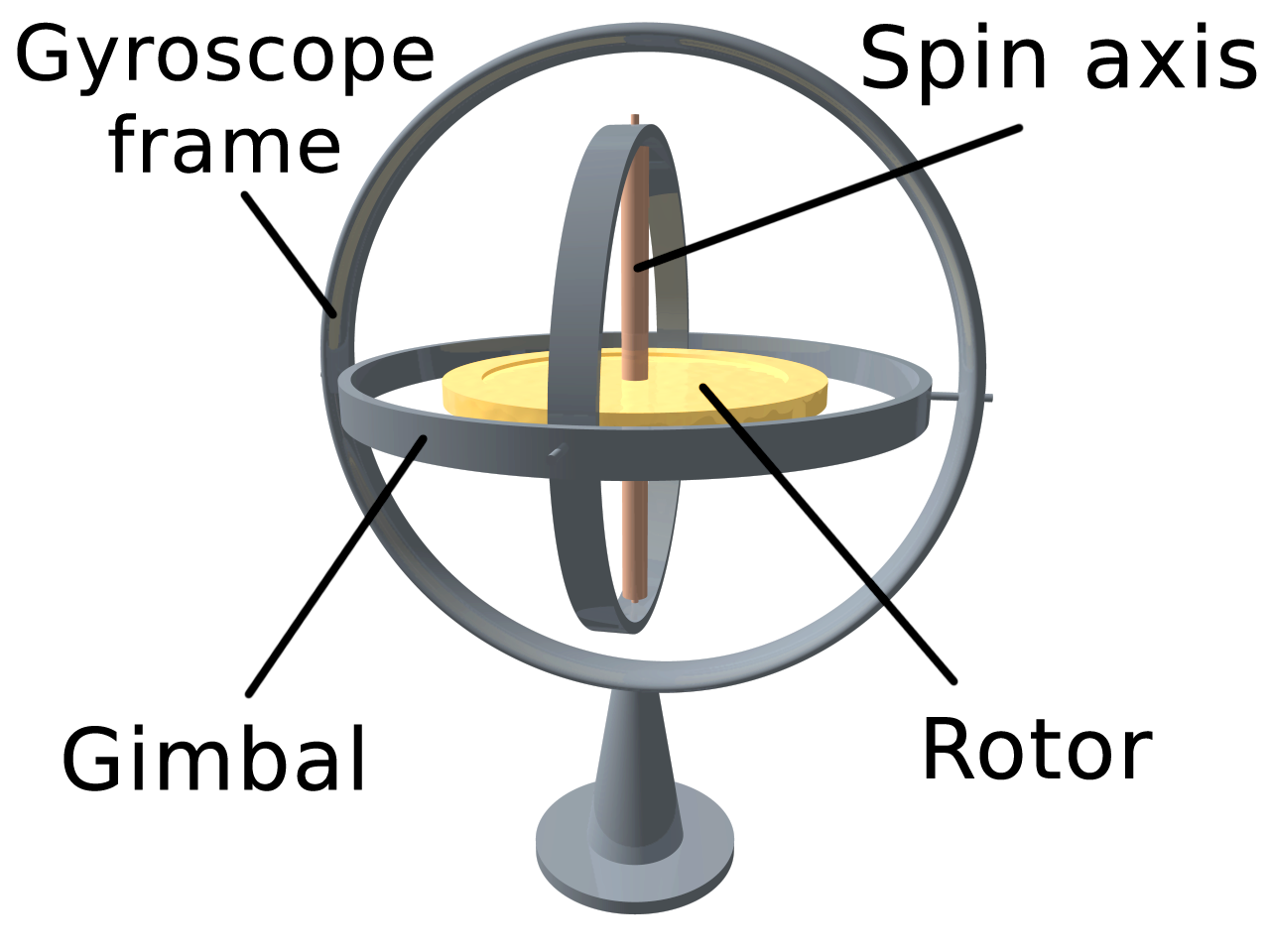
A gyroscope may be defined as a rigid body capable of three-dimensional rotation
with high angular velocity about any axis that passes through a fixed point called center,
 which may or may not be its center of mass.
Once the rotor is set spinning, a gyroscope appears to act like a device
 possessing intelligence. If we attempt to move some of its parts, it seems not only to resist this motion but even to evade it.